
Sustainability has become a strategic priority for the global sleep products industry. Increasing environmental regulations, rising material costs, and shifting consumer expectations are forcing manufacturers and suppliers to rethink how mattresses are designed, produced, and managed at the end of their life cycle. Among these developments, mattress recycling has emerged as one of the most critical components of a circular economy.
Mattresses are bulky, multi-material products that traditionally have posed serious challenges for waste management. When disposed of in landfills, they occupy excessive space and contribute to long-term environmental burden. In response, structured recycling programs have been developed to divert mattresses from landfills and recover valuable materials such as steel, foam, textiles, and wood.
Industry Progress in Mattress Recycling
In the United States, organized mattress recycling initiatives have demonstrated measurable results. According to data published by the Mattress Recycling Council (MRC), more than 2.7 million mattresses were recycled in the states of Connecticut and Rhode Island over the past decade. This includes over 300,000 mattresses recycled between July 2024 and June 2025 alone, representing more than 5,000 tons of material recovered and reintroduced into secondary markets.
These programs are funded through state-mandated recycling fees and supported by manufacturers, retailers, and commercial sellers. The results highlight how coordinated industry action can significantly reduce waste while creating economic and environmental value.
Why Mattress Recycling Is Essential
Mattress recycling delivers benefits across multiple dimensions:
As sustainability standards evolve, recycling is no longer viewed as a voluntary initiative but as an operational requirement for responsible manufacturers and suppliers.
Circular Economy and Product Responsibility
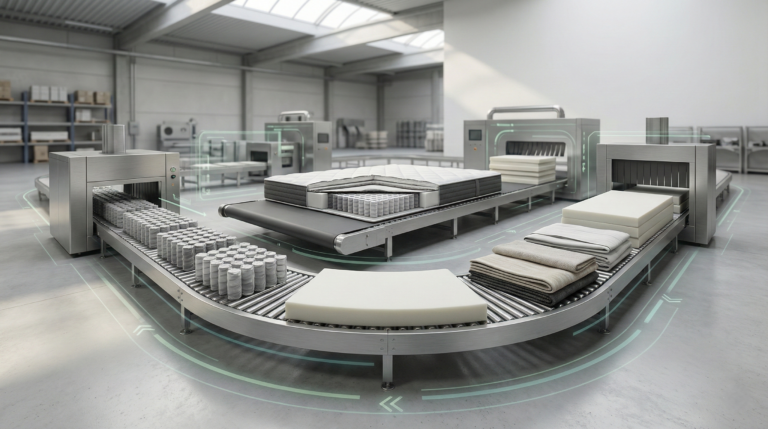
The growing emphasis on recycling reflects a broader industry shift toward circular economy principles. Rather than following a linear “make–use–discard” model, companies are increasingly designing products with durability, repairability, and recyclability in mind.
This transition requires collaboration across the entire value chain, including:
End-of-life responsibility is now recognized as a shared obligation, reinforcing transparency and accountability throughout the industry.
From Waste Management to Value Creation
Recovered materials from recycled mattresses are commonly used in applications such as carpet underlay, insulation products, automotive components, and construction materials. These secondary uses reduce reliance on virgin raw materials and help stabilize supply chains during periods of global volatility.
For manufacturers, recycling initiatives also support long-term cost efficiency, brand credibility, and alignment with corporate sustainability goals. For consumers, they reinforce trust in companies that demonstrate measurable environmental responsibility.
Conclusion
Mattress recycling is no longer a peripheral topic within the sleep products industry. It is a core element of sustainable manufacturing, responsible distribution, and circular product design. As global markets continue to prioritize environmental performance, recycling programs will play an increasingly important role in shaping the future of bedding production.
At Naptex, we monitor international industry developments closely and support data-driven, verifiable sustainability practices that contribute to long-term value creation across the supply chain.